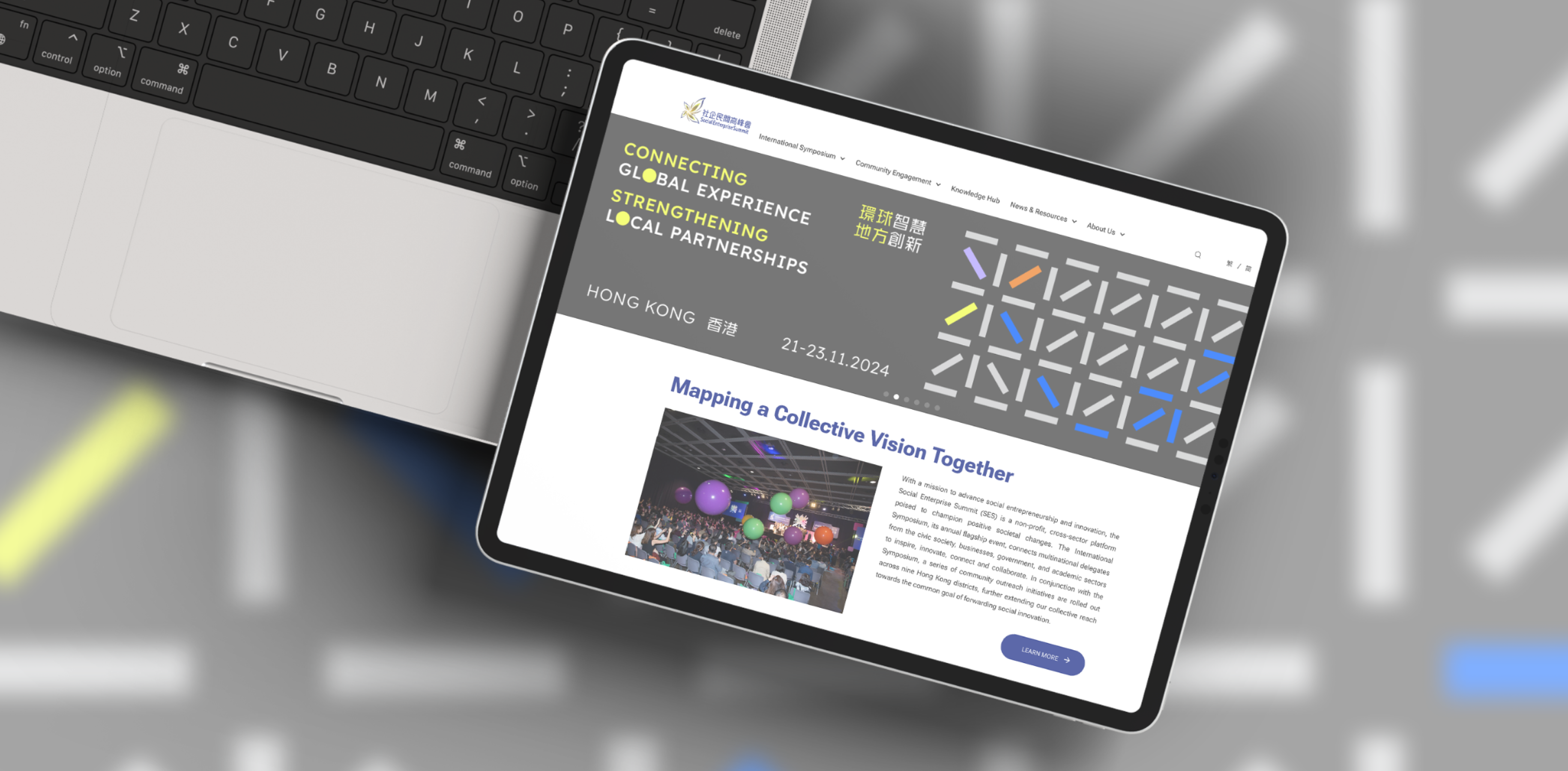

Digital Platform Design and CMS
The original platform and its central management system (CMS) cannot fulfill the requirements of business management. It requires a new platform with a manageable CMS for easy and simple handling of daily tasks. New functions and optimization of user usability are also required. Therefore, part of the original website has been redesigned while the whole CMS has also been built with new structure and organization.
This project ran in agile mode within four months. In the development period, the CMS and front-end site were in an iterative process of building, reviewing, user testing, modifying, and final migration. The platform was launched successfully and seamlessly a few months before the event date of social enterprise summit. It provides sufficient time for marketing team to operate and promote the summit on the platform.
On the beginning stage, the original site was reviewed and analysed. Information architecture (IA) was made for combining its main navigation and side menu so as to enhance usability, allowing users to find information quickly and easily.

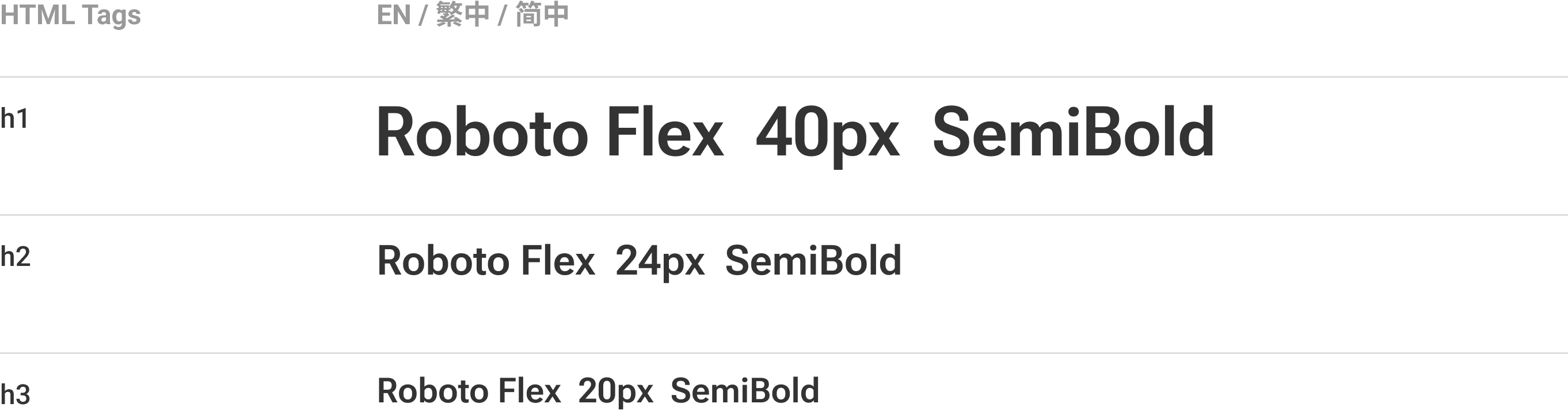
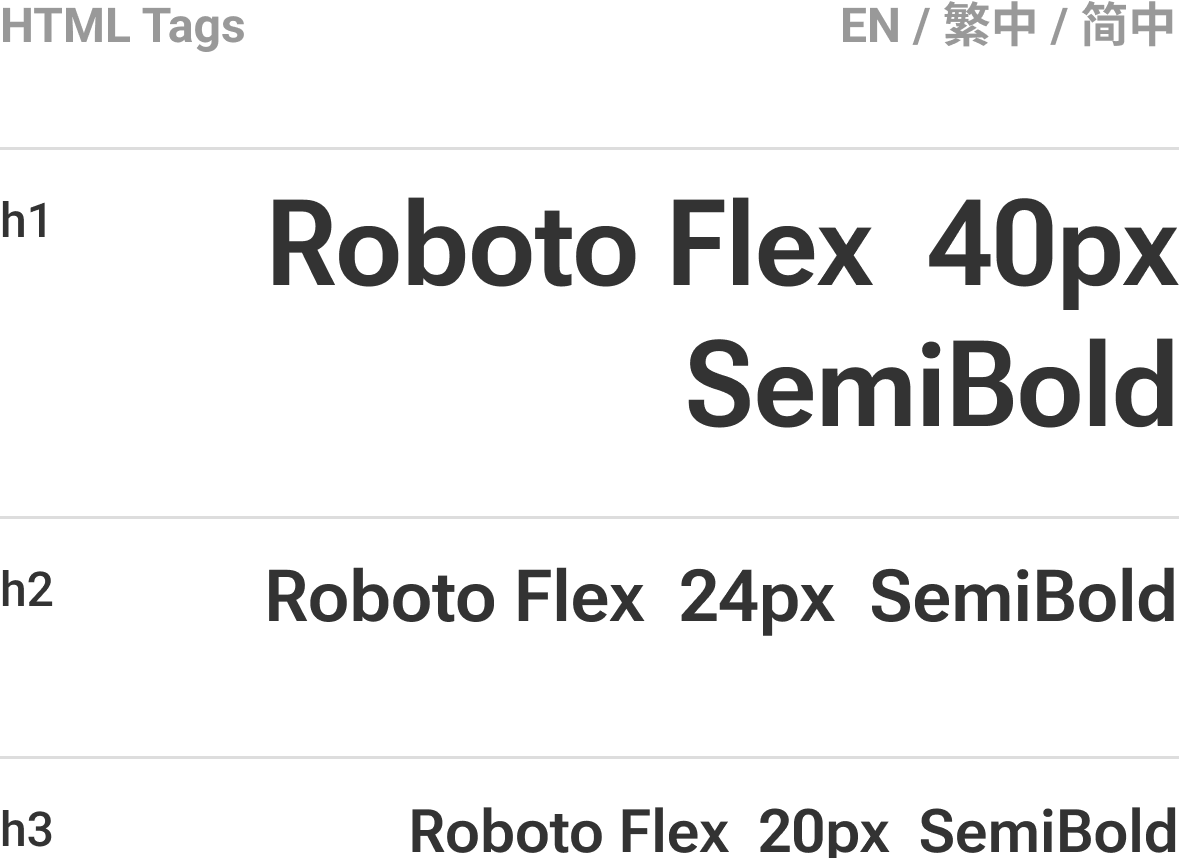
Headings
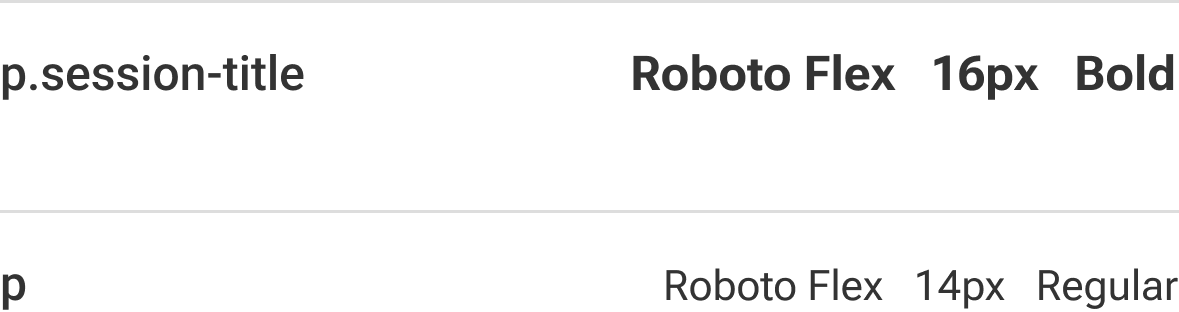
Content

Primary Color
Secondary Color
Tertiary Color
Flexible to add for any sub-category according to the theme.
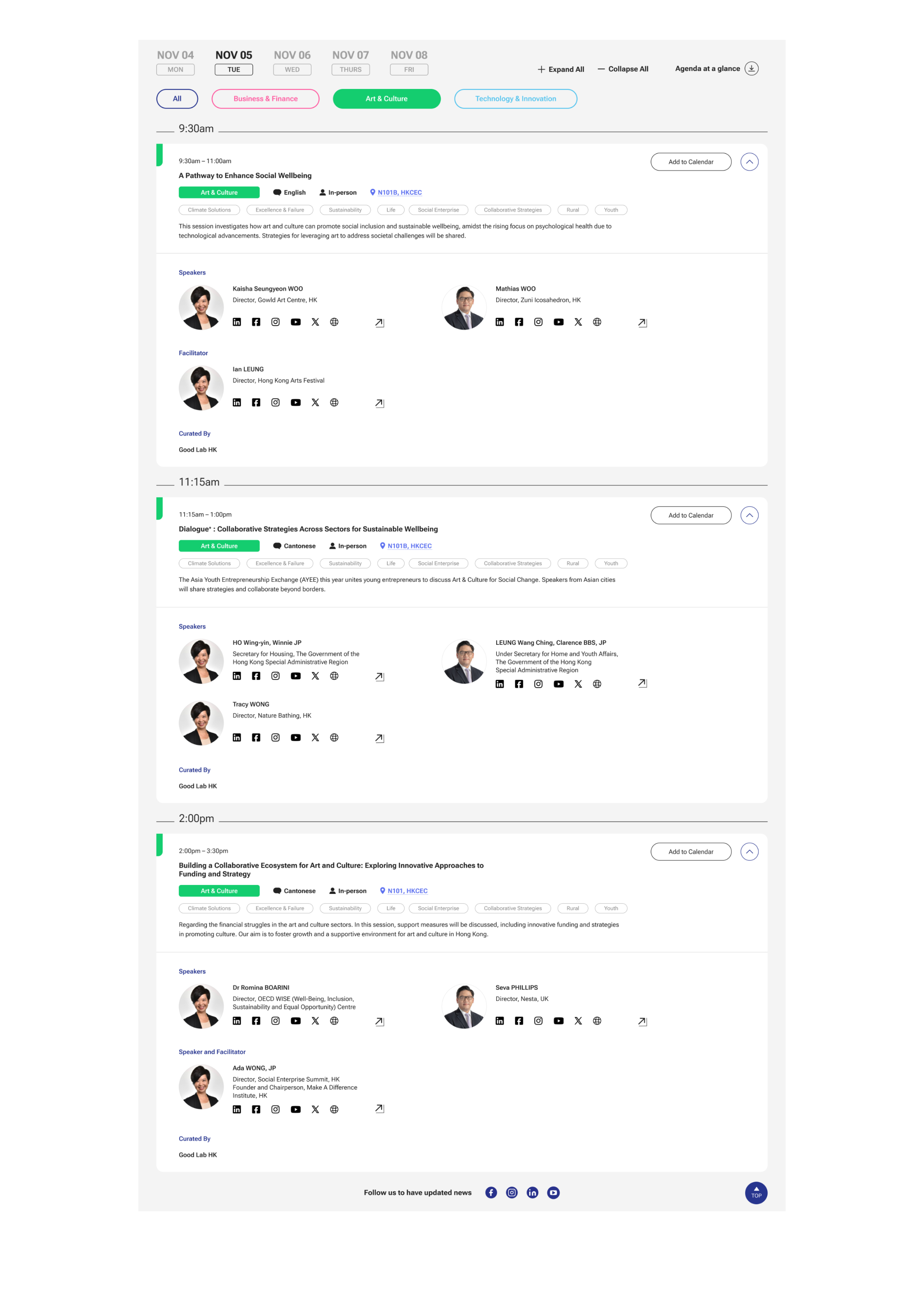
Desktop - Agenda (Day One)

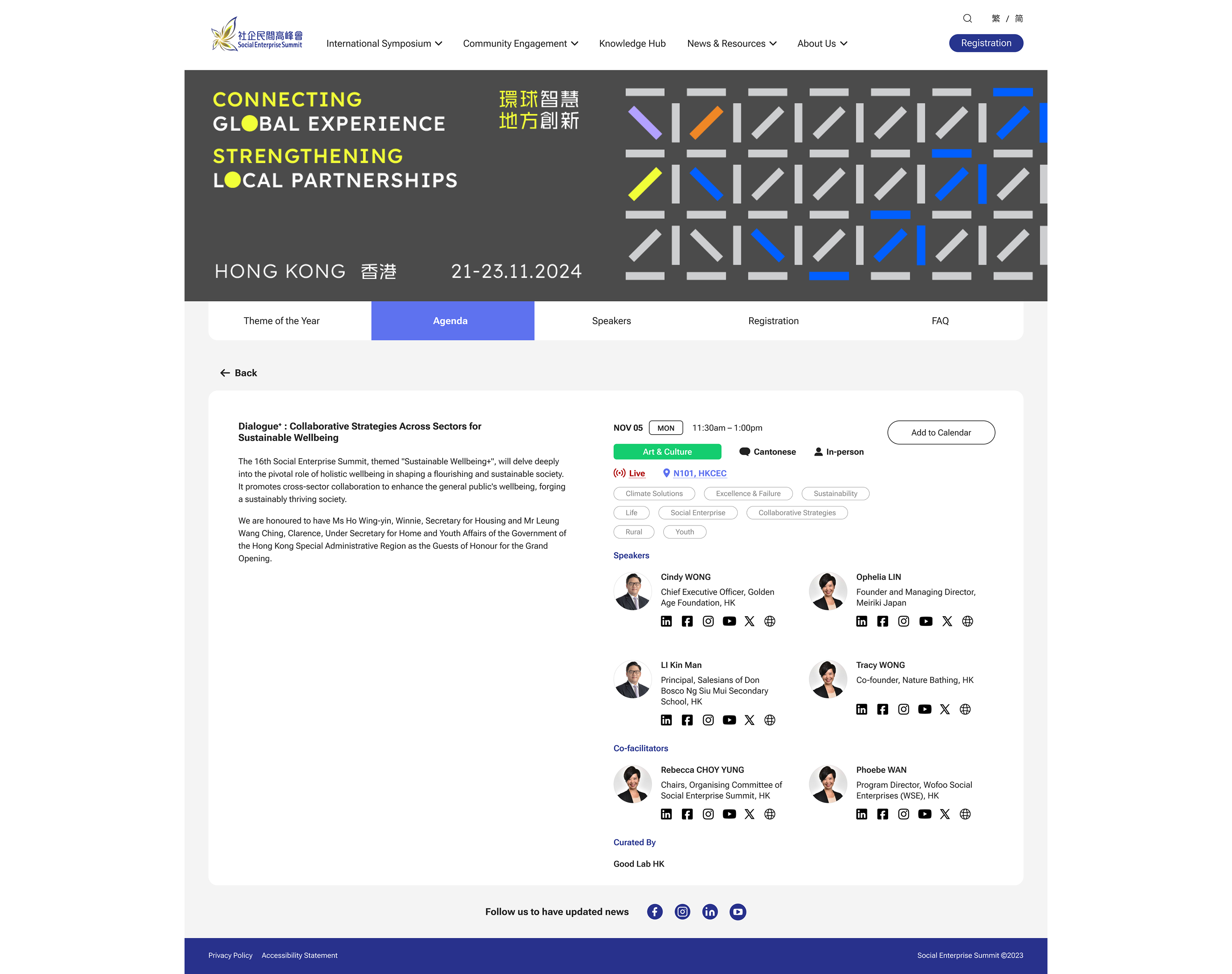
Each agenda session demonstrates different scenarios of summit’s business requirements. They share the same design and framework with various combinations of information.
An agenda session can consist of
All above agenda information can be input and managed flexibly in the CMS.
Automated function was designed and built. The date menu and time divider are generated by system, and sessions with the same start time are grouped together after inputting the session information into CMS.
Desktop - Agenda (Day Two)
Agenda on the second day exceptionally requires tagging and filtering functions according to theme categories, so the UI design was a bit different when the additional functions of handling those requirements were added to the CMS.
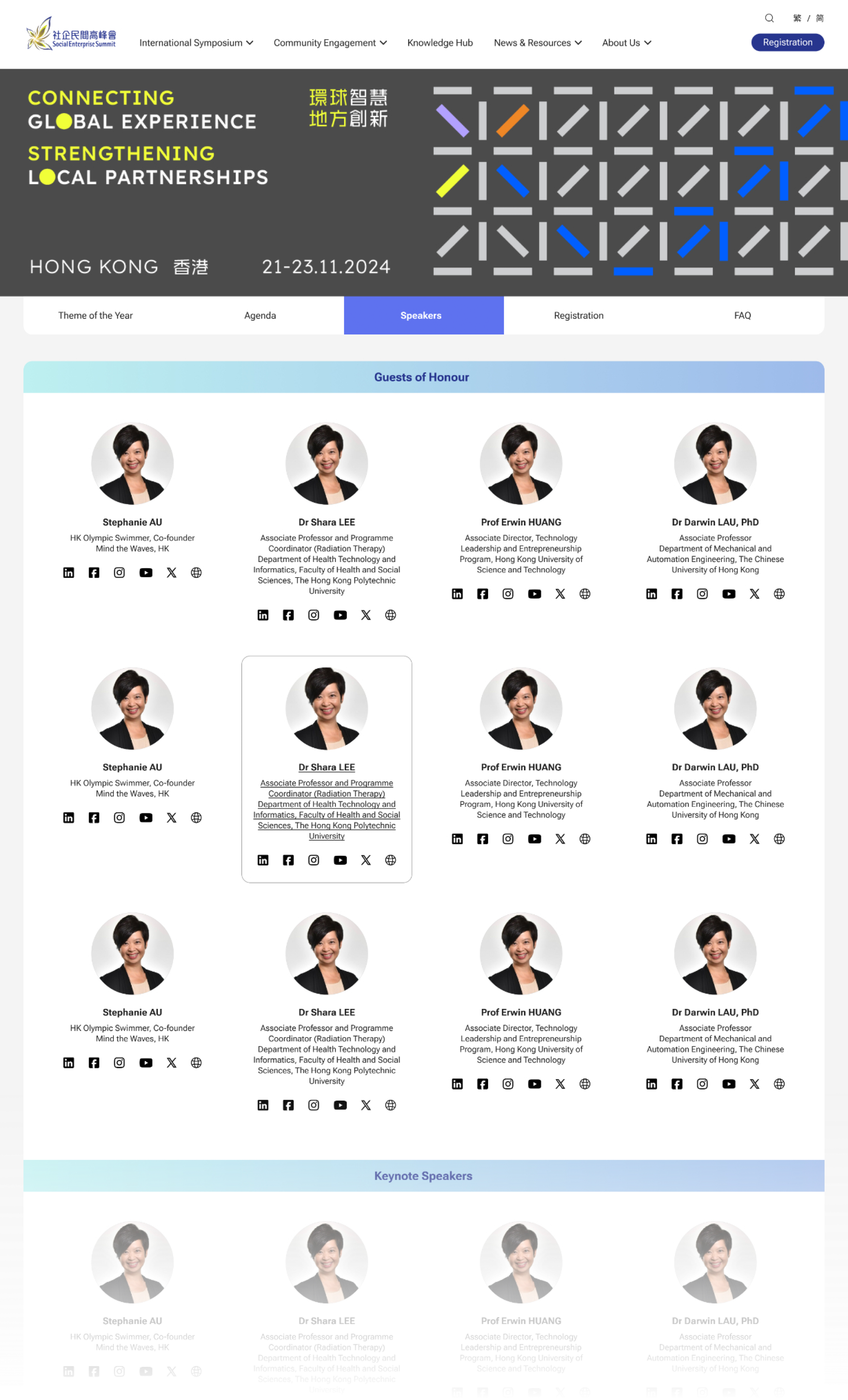
Speakers List
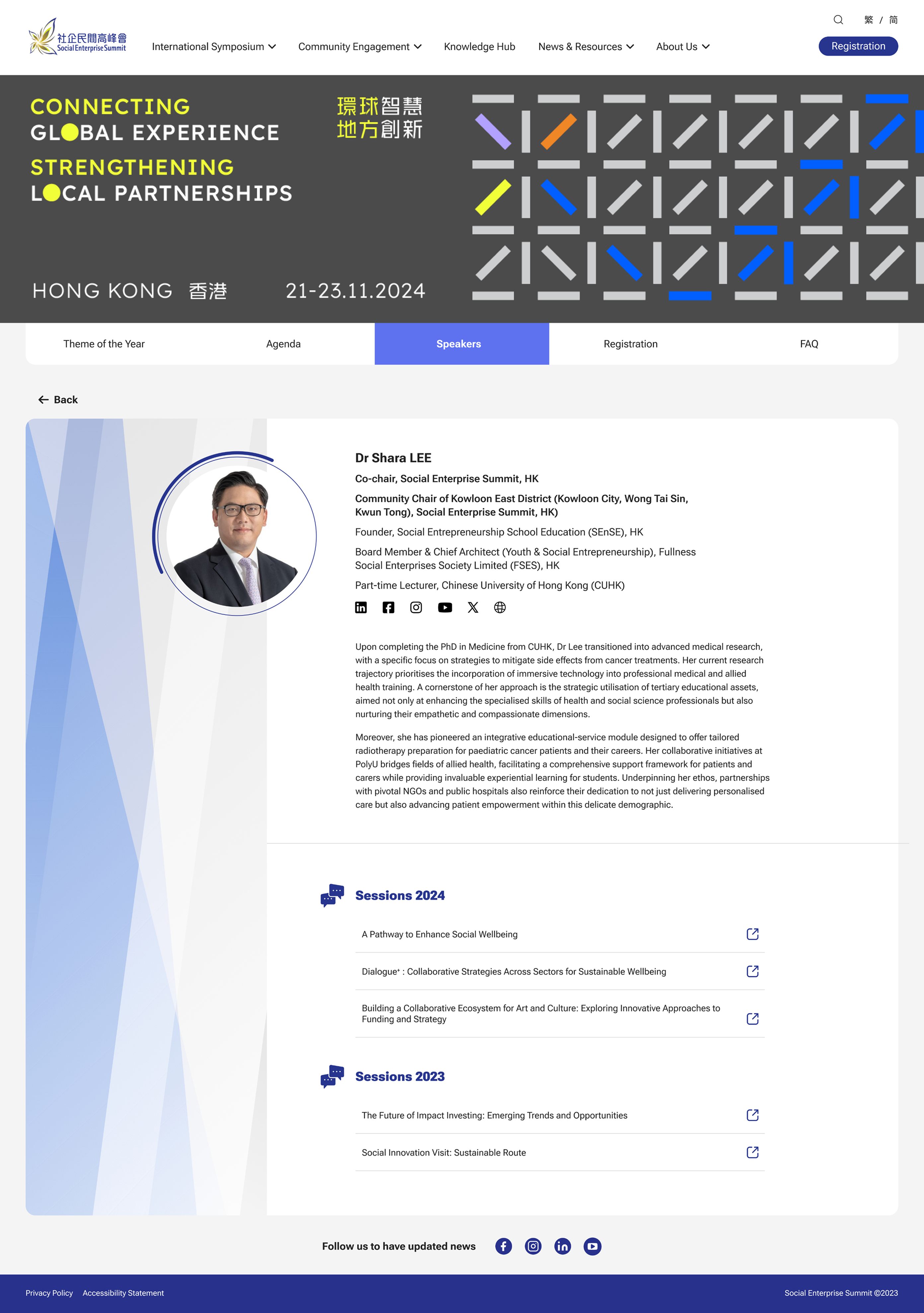
Speaker Detail
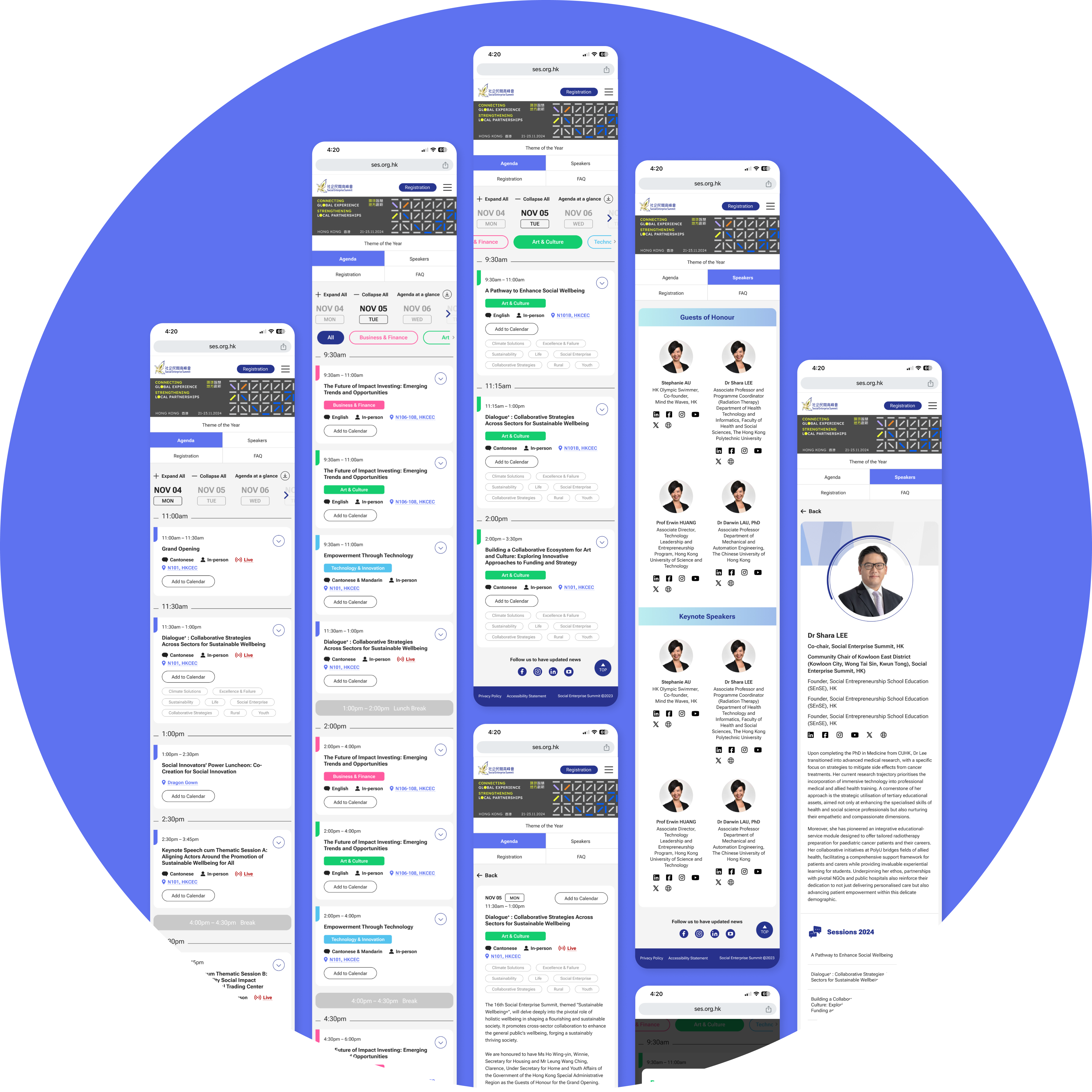
Mobile
This project ran iteratively in a cycle of development, review, user testing, refinement and modification for four months before the public launch. The team was small and remote but experienced. The Kanban methodology, using digital platform ClickUp, was employed to manage all tasks. The process was quick and smooth.
Function specifications and issue logs were written clearly in a typical format. Writing format samples are below.
To communicate with clients effectively and efficiently, as well as meet their adaptability needs, the response followed the format they used. After every review release, the newly built platform was shared with clients for testing and feedback. If any issues occurred, they were passed to the development team for improvement.
Mr. Ronald So
Stakeholder / Client
Thanks for your effort. Kay and I think you followed up very well.
Luan DT.
Development Team Lead
It has been my pleasure to work with you over these past months. I often compliment you to Anh Do because your feedback is very clear and detailed.
Tuan Anh Do
Developer
You are the best tester since I worked in this agent company.
Hope to work with you again in the future.